ServicesReverse Mortgages
Reverse Mortgages in Williamson, GA
A reverse mortgage lets you borrow against the equity in the place you live, with no monthly mortgage payment while you stay there. We explain how the balance grows, what you still owe each year, and what happens for your heirs, so you can decide with clear eyes.
What a Reverse Mortgage Is, in Plain Words
This is a home loan for borrowers age 62 and up. You draw money out of the equity you have built, and there is no monthly mortgage payment for as long as you live there. Most are HECMs, short for Home Equity Conversion Mortgages, a program that runs under FHA rules.
Your name stays on the title. You still cover property taxes, property insurance and upkeep. The loan comes due when you sell, move out for good, or pass away. Interest and fees get added to what you owe, so the balance climbs over time instead of shrinking.
It often makes sense for a retiree in Williamson or Griffin who plans to stay put, wants to clear an old mortgage, or needs steadier cash flow. It is not right for everyone. If it is not right for you, we will tell you.
What We Handle for You
- An honest read on fit
- We start with your age, your equity, any current mortgage and your plans. If a cash-out refinance or a home equity line would work better, you hear that on the first call.
- Payout choices side by side
- The money can come as one lump sum, as steady monthly checks, as a credit line you draw on when needed, or as some combination. We lay out how the balance grows under each one, year by year, so the trade-offs are plain to see.
- Help with the required counseling
- Before any application goes in, federal rules call for a session with a counselor approved by HUD. We tell you what topics come up and help you find a time that works.
- Getting your papers in order
- The lender looks at your income, credit and record of paying bills to confirm taxes and insurance will get covered. We give you a short list of what to gather so the file does not stall.
- Room for your family
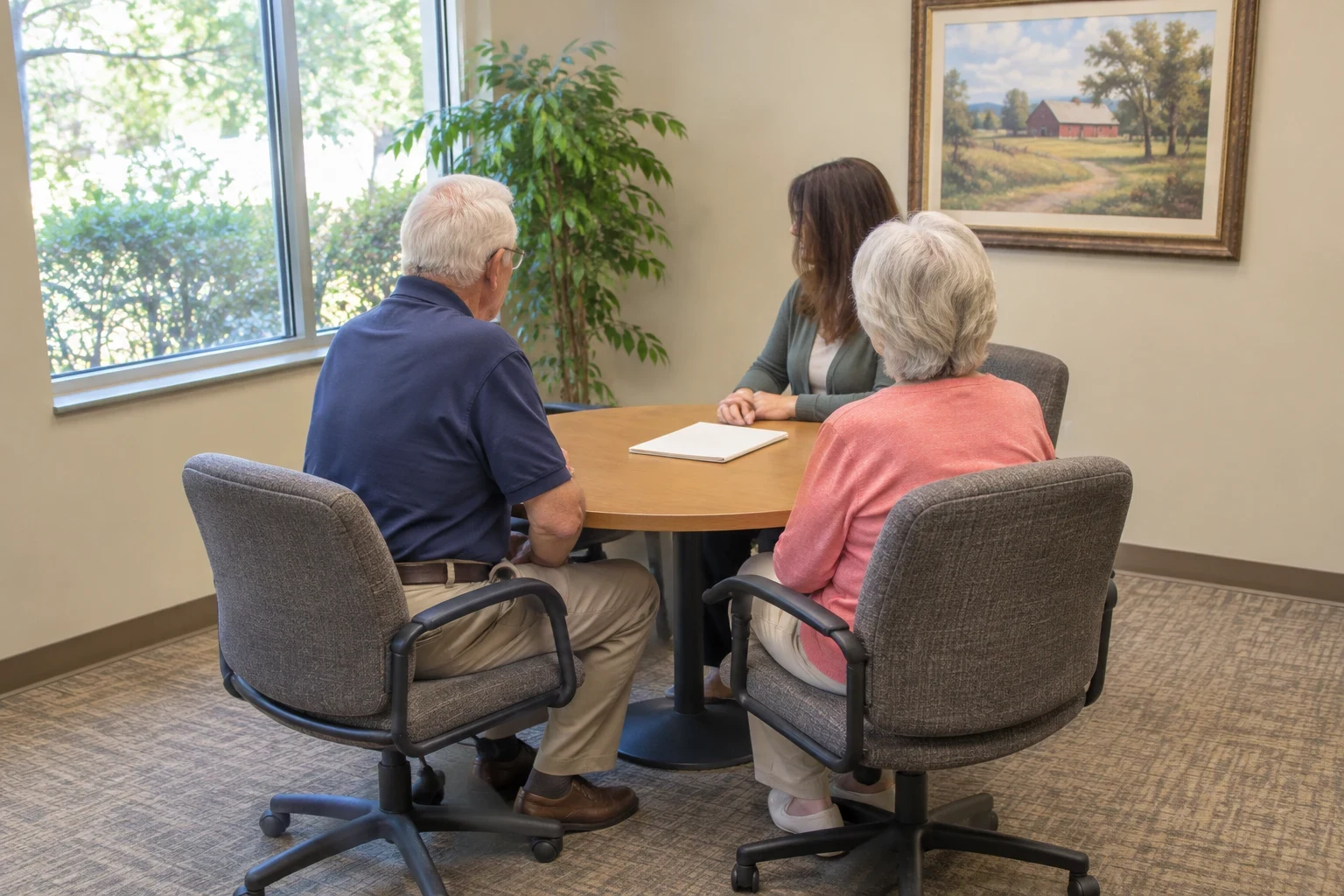
- A lot of borrowers want their grown children involved. We are happy to go over the loan with your family by phone, by video or at our office.
When a Reverse Mortgage Starts to Make Sense
A fixed income goes mostly to the mortgage
If a big piece of your Social Security check leaves every month for the house payment, retiring that mortgage with a reverse mortgage can put that money back in your pocket.
You expect to stay a long time
The upfront costs are easier to justify over many years. If you may move in the next few years, other options usually cost less.
Your savings are mostly in the property
Many retirees have plenty of equity but little in the bank. A line of credit gives you a backstop for medical bills or large expenses without having to sell.
You want a smaller place with no new payment
A HECM for Purchase lets you buy a smaller property, maybe all on one level, without taking on a monthly mortgage payment.
How the Process Runs
- 1
Free consultation
We talk about what you want the money to do and run rough numbers. You walk away with a clear yes, no or maybe, with no push either way.
- 2
Meet the counselor
An independent counselor approved by HUD goes over the loan with you, over the phone or face to face. Afterward you receive a certificate, and that lets the application go forward.
- 3
Paperwork and home value
Once your file is complete, an FHA-approved appraiser comes out to set the property's value. That number, along with your age and the rates at the time, sets how much you are able to draw.
- 4
Review and closing
Every fee is shown to you in writing before closing. Once you sign, federal rules give you three business days to back out before any money is released.

What Shapes the Cost and the Amount You Get
A reverse mortgage has real costs, and most are rolled into the loan instead of paid out of pocket. That is easy on cash today but adds to the balance. We list every charge before you commit.
- Your age
- The age of the youngest borrower or eligible spouse matters most. Older borrowers can usually access a larger share of their equity.
- Appraised value and FHA limits
- Your proceeds are based on the appraisal, capped by the FHA lending limit for the year.
- Interest rate
- A lower rate means more money available and slower balance growth. Fixed rates usually require a lump sum, while adjustable rates allow a line of credit.
- Mortgage insurance and fees
- HECMs carry an upfront and an annual FHA insurance premium, plus origination, appraisal and closing costs. We spell each one out.
- Existing mortgage
- Any current mortgage must be paid off at closing, so a larger payoff leaves less for you.
Reverse Mortgage Questions We Hear Most
Something not covered here? (770) 758-4659
Can the bank take the house?
Not as long as you keep up your end of the loan. That means living there as your main residence, paying property taxes and property insurance, and keeping the place in good shape. Falling behind on taxes or insurance is the most common way borrowers get into trouble, so we look closely at that before anything else.
What happens to my kids when I pass?
Your heirs get three options: sell the property, keep it by paying off the loan, or hand it over to the lender. Because a HECM is a non-recourse loan, the most they can ever be asked to repay is the lower of two numbers, the loan balance or 95 percent of the appraised value. If a sale brings in more than the balance, the leftover equity is theirs.
My spouse hasn't turned 62 yet. Is that a problem?
Not always. When certain conditions are met, a spouse under 62 may qualify as an eligible non-borrowing spouse, which can let them stay in the property after the borrower dies. Their age also lowers the amount you can draw. We go over both points on the first call.
Will this affect my Social Security or Medicare?
Money from a reverse mortgage is loan money, not income, so it usually leaves Social Security and Medicare alone. Needs-based programs like Medicaid can work differently if the cash sits in your account. Check with a benefits advisor about your own case.
Can I still leave the property to my family?
Yes. The title stays in your name, and your heirs inherit the property along with the loan. They choose whether to pay it off or sell.

Get Your Questions Answered First
A reverse mortgage is a big decision, and you should understand every piece before you sign anything. Tell us your situation and a loan officer will walk through it with you, plainly.